MOROCCO SPAIN
Wednesday, October 31, 2007
Bumps From Stretching Labia
A country that borders the north by the Mediterranean Sea to the east and southeast by Algeria, on the south Saharawi Republic and west to the Ocean Atlantic.
Morocco has a population of more than 30 million people composed of Berbers, but also by Arabs and Jews. Its capital is Rabat and speak Berber, Arabic and French.
Moroccan music live in the sacred sounds and rituals of the descendents African slaves, with Arab and Andalusian songs. There are a lot of music of a religious or ritual, we expand the Western world achieved and genres like Gnaoua or to a lesser extent Chaabi music called Rai are influenced pop and other genres in the West.
GNAWA
The Gnaoua is defined by the history between Black Africa and the Maghreb. Moroccan populations created this style based on the Arab sacred songs and incorporating African rhythms, especially from Land of the present Senegal, Mali and Guinea. The Gnaoua used mostly called tbal percussion, bass sound of the stringed instrument Guimbri or feel, of 3 acres which gives a steady pace and an instrument called Querqbat or Carcaba which are a kind of metal castanets. In turn, World Music Festival Gnaoua has become one of the cultural and ethnic events in the world.
In this global festival, artists from around the world gather each year in June to remember a musical tradition goes back centuries in the history of Mogador Essaouira, a city emblematic of this style. This festival masters of Gnaoua share their musical experiences with musicians from jazz, rock and pop.
Among the most prominent groups include major artists Gnaoua the Maghreb, not only in Morocco but also in Tunisia and Algeria.
worth mentioning that the Gnawa masters are healers, use their songs about liturgical rites following highly structured codes based on ecstatic dance. Gnawa practice may relate to practice shamanic, using music and dance for ritual purposes. The masters of this style leads whole nights to the beat of the music. These evenings are called "Lilas" where participants engage in cathartic trance.
Certain Gnawa masters, Maalem Mahjoub is very famous in Europe for their live performances on stage showing the ceremony. And it has recorded an album quite faithfully reproducing the climate of one of these evenings called "Lilas". The pieces on this album are very long, lasting between 7 8 and 15 minutes, because they are ritual.
This is Moroccan Gnawa was played in the 2003 edition of the festival to which we referred, is titled "Dawi.
Chaabi
C haabi means popular. Is the one heard on the radio, the most widely recorded in the cassette that proliferate in desquerías. The music is Chaabi cheerful and easy, very akin to the traditional Berber , there are plenty of singers and instrumentalists, highlighting successful Nayat Aatabou, a woman with personal style and lyrics of social and feminist content. Other outstanding artists are Khaled Benani, Faissal or
The Chaabi is a living heritage árabeandalusí music that emerged in the thirteenth and fourteenth centuries. incorporates rhythms and melodies giving it a different merging many times with electronic music.
At weddings, festivals, markets and cafes, is one of the styles heard in Moroccan territory, especially in the north. Different groups are well known in Morocco as Nass el-Ghiwan, which Martin Scorsese group named as the Rolling Stones of Africa.
Electronic Music
Moroccan music not only manifestations has traditional, religious. The music could add their mark in different sounds and rhythms typical Moroccan. Draws attention to a project developed in Italy by the Moroccan Nour Eddine. The album is called Coexist, alluding to the brotherhood of peoples beyond their religious beliefs.
The album title and cover photo (traditional instruments resting next to a computer monitor) and give an idea of \u200b\u200bthe purpose of Nour-Eddine to compose, perform and record this album. A feeling that is confirmed when I opened the box we came across the word "Coexist", where they mix icons Christians, Jews and Muslims, and a manifesto declaring that the word is a philosophy of life of the global citizen, living in harmony, respecting nature and the rest of the world's inhabitants, without distinction of creed. A conception that is reflected in each of the sounds on the album.

Musically this work is solid and powerful. Mixing traditional instruments of the Maghreb region (dud, ney, Leira, among others) with electronic program designed by Oussama Elkarrichi own voice and Nour-Eddine, and some guests special. Eight songs, including traditional creations and arranged by the Moroccan plus instrumental version of title track to disk. The title of this song gives the album name and the project of coexistence among peoples of the East.
The Rai
Morocco shares with other Maghreb countries the presence of Rai, Algerian-born rhythm more precisely in the city of Oran.
early twentieth century its origins lie in ancient religious traditions and folk music Muslim Bedouin. Rai word means, "view", "opinion" or "counsel." This is a style that has become very popular because it is very danceable and has simple lyrics but features and committed.
The Rai has been a highly controversial style in his native Algeria, in fact, the radio broadcast was banned until 1985, despite government attempts to turn it off 2, and has spread throughout the world.
The fact that these letters are in a language unknown to us and that the message of Rai, does not prevent part of the message can be sensed enjoying the music and understanding it beyond words.
The Berber origins Rai has an influence of Western music. His subjects reflect the problems of North African society in general and especially of youth (love, social marginalization, migration, alcohol, drugs). The best-known Algerian singer Cheb Khaled is, but the rai offers many other names like, Cheb Hasni, Nasro, Cheb Mami, Cheb Samir Cheb Aïssa, Chaba Zahouania, Faudel.
Let's hear a Belgian singer but of North African origin, specifically Egyptian and Moroccan. Natacha Atlas released their first album in 95 and coincidentally titled "Diaspora2 last year released her sixth album Mish Maoulida. Kidda theme can be translated as "So" and is a love song originally included on the disc, 1997 Halim, second album of this singer who grew up in the Moroccan quarter of Brussels, Belgium and sings in English, French and Arabic.
Abdelaziz Abdellah Daoudi Status and
Abdelaziz Status Chaabi is a singer of this style that permeated certain Balkan influences. Born in 1961 in El Jadid. His uncle was a violinist and singer and in turn was the first teacher who fell in love Abdelaziz violin as an instrument and with only 12 years to be sent to Casablanca with the objective of working to buy his first instrument. In the 80 he made his debut album. After editing the first cassette is positioned well in the North African market within the Chaabi music, style in which he specialized since its inception.
Furthermore Abdellah Daoudi singer, whose real name is Elmakhlouk Abdellah born in Casablanca in 1972. Daoudi the nickname is a tribute to its origins, because it comes from the Tribe
Daoudi and Status are those who close the crossing lands today by Moroccan and show us in his singing and flamenco inflections because the Arab influences are and African. And why the Andalusian culture very close to the Maghreb with this subject entitled "Aatini the visa"


Dune Buggy Radiocomandato
It was discovered on the 3rd voyage of Christopher Columbus, August 2, 1498. Buildings on stilts local English to Venice and so gave the country the name of Venezuela:
Many forms, rhythms and melodies were born and continue to evolve in Venezuelan geography. The most famous of all is the national gender and Joropo. Some versions about the origin of the word Joropo report that comes from "Xarop" Arabic word syrup. It also believes that the coming joropo the old continent, and has ways and means related to Andalusian flamenco and other dances. It's a genre constantly reinvented and improvisation is the main axis.
Cecilia Todd is one of the artists that has penetrated deep into the Argentine public though not as recognized as it deserves in their country of origin. Her first album called "Green Bird" was recorded in Argentina and published in 1974.
born on 4 March in Caracas, Venezuela. He plays the cuatro and sings. Which is nothing taking into account simple rhythmic holding the instrument in both the Joropo as the Tango Merengue and other typical rhythms of Venezuela.
early age was devoted to collecting, researching and disseminating the music of his country. From October 9, 1972, when he first music concert
Cecilia is impossible to discuss without mentioning the four. She became known For over thirty years this instrument and also marveled at the milking songs are sung in the field at dawn d 'm way too joropos and meringues.
This broad spectrum of Venezuelan music, are present four small maracas, humor and playfulness popular and Cecilia Todd's voice, clear and vibrant, the music service.
Polo is considered by many as a genre that has a great search poetic and lyrical. The songs are in this style improvised by fishermen of the island.
Cecilia Todd interprets this magnificent Polo whose songs were collected by the folklorist John Liscano in 1942.
THE
Many forms, rhythms and melodies were born and continue to evolve in the Venezuelan geography. The most famous of all is the national gender and Joropo , born in the "flat" Venezuelans and n or single type of joropo.
Many modalities have emerged over time. In most of the Venezuelan geography, the joropo can be seen in its many forms of dance and touch. The main instruments used to play the Lone Ranger Joropo are
The harp : It's different traditional or classical harp. It has a narrow sounding plugs are placed in two rows.
FOUR : is a member of the family of old guitars and English guitars. Small, owes its name to the number of strings you have. Is run mainly by strumming or charrasqueo.
bandola LLANERA : is four strings (gut or nylon).
THE MARACAS : known are the seeds rattle inside.
The joropo is a genre constantly reinvented and improvisation is the main axis. We can draw roughly, 3 regions differ in the way of dance and play this rhythm:
Joropo Ranger : zapateos is characterized by strong man and very subtle swabs of women .
tuyero or central Joropo : Runs in the central plains of the country. Is much slower and less heavy stomping, but in the field rhythmic complexity increases, due to overlapping bars at different times.
E l joropo tuyero or central difference two generic forms: The passage (or uprising) and The Sting.
l E passage consists of three parts, repetitive music with no chorus, consisting of periods of four or eight bars.
l E blow instead has two basic parts, the verse and chorus, the verse being composed two songs. Its poetic form is especially the song. This memorial transmitted music is characterized by its ternary rhythm in 3 / 8.
East Joropo : In the east, it is customary to touch joropos that unlike previous ones, give more space to move your hips.
Among the genres of Hispanic descent, as joropo, we can find a popular style called Merengue Venezolano.
The Venezuelan Merengue came from a combination of popular rhythms such as polka, dance and tango. It has no connection with the Argentine tango, but with the English tango, or tango Cadiz. In the 20's, especially in Caracas, merengue became a musical form that extends throughout the Caribbean basin.
The orchestration of the meringue is made up of four solo instruments: trumpet, trombone, saxophone and clarinet and the four accompanying instruments, bass and percussion. The pace can be of 2 / 4 or 5 / 8.
In Venezuela there are different music ensembles taking over the root and re-interpreted from a contemporary perspective and in turn is a great tradition of string players, who are developing the touch of Four ,
Achilles is internationally recognized figures such as Paquito de Rivera, Richard Bona and more. Lives in New York and runs multiple styles both traditional and Venezuela también Jazz o Klezmer. En su aspecto como docente, Aquiles ha sabido ser un formador y un continuador de la tradición de la guitarra venezolana.
Entre los grupos de jóvenes que han sido influenciados por su música se encuentra un ensamble de tres grandes músicos que se dedican precisamente e las cuerdas, un trio de cuatro, mandolina y guitarra llamado Kapicua. Aquiles conoció a dos de sus integrantes en un taller que dictaba en Nueva York y al tercero en el mundo de la guitarra escuchándolo tocar por casualidad.
En otra oportunidad at a workshop in Caracas where these talented young people agreed, Aquiles Baez decided to introduce the 3 musicians and encourage them to make music together. Thus it was that Edward Ramirez added his four Jorge Torres mandolin and guitar and was born Alvaro Paiva Bimbo Kapicua assembly. Retake those traditional rhythms of Venezuelan folklore and interpreted with this particular string instruments.
Waltz
The waltz is a genre that clearly came from Europe but that the land on our continent suffered mutations that rooted interesting to these lands for indigenous particularities really outstanding.
He arrived after
This genus is characteristic of the Andes region and the West Central region of the country, however you can find in other parts of the Venezuelan geography with particular differences.
is interpreted, guitar, tiple, harp, four, piano and clarinet, the latter added.
In the Andean region the violin and mandolin are the solo instruments, accompanied by guitar, tiple and four.
The Encayapa group .
This group of six members is proposed to dilute the boundary between popular and academic. Some members of Encayapa, met at the Graduate Institute of Musical Studies. Others were part of the Symphonic Orchestra of Venezuela Simon Bolivar Youth.
Encayapa The percussionist, Leowaldo Aldana, is part of a research team aimed to rescue the legacy of African music in Venezuela.
drum beats. VENEZUELA AFRO
Beyond the rhythms of English and indigenous descent in Venezuela you can find a strong African roots that has influenced a multitude of rhythms and also developed an interesting range of drums.
One of the genres that became entrenched in the traditional folklore of the country is the drumbeat that represents the legacy of African slaves that took hold in the Venezuelan coast. The drum beats in Venezuela are linked to cult San Juan and San Pedro. This music has concentrated on the coast, specifically from the central Miranda state to western Yaracuy state.
There are several drums arrived in Maracaibo by black slaves from what is now Angola, Congo and Zaire. Mina drums complexes composed of 2 drums: the mine and the Curbata, run with the Laures or clubs with which you strike the drum corps.
used all round drums known as puja culo'e three conical drums with two membranes that run as an accompaniment to the songs and dances of the festival of San Juan. Finally there are the blows of drums cumaco, where the polyrhythms comes in variants of the second drum, the freedom of maracas and some accents setback of the third drum.
Another interesting example is that of calypso, Afro-Caribbean rhythm originally from Trinidad and Tobago , very popular in the Caribbean islands Anglophone and Francophone also Costa Rica, Panama and southern Venezuela .
African slaves were brought to the Antilles to work, being away from their family and cultural roots. I was not allowed to talk among themselves during working hours, so they began writing songs as a means of communication and entertainment. The language used was a mixture of French and English called patois. Patois is precisely that today plays calypso. The guitars, drums and maracas make instrumentation Venezuelan calypso typical.
This rhythm traveled to Venezuela in mid-nineteenth century with immigration of male and female slaves from the British and French Antilles, who moved the country to work in mines operated by Gallic and British.
The Venezuelan calypso coined characteristics that differentiate it from other regions of Caribbean calypso. It incorporates four and became popular especially in the Callao area, in southern Bolivar state. Their lyrics often contain a mischievous tone of social criticism.
calypso drums are cylindrical mambranófonos a single patch and are of Indian origin. This battery consists of three drums, two of them define the calypso, while a third smaller drum and sharper temple known as Bum-Bac make the chimes. Accompany calypso carnival celebration in the region of Callao.
Bagpipe, ZULIA
Another rhythms that can be mentioned more in detail in this journey through Venezuelan music is the bagpipes. Original Zulia state in Venezuela . Today it is a genre that is associated with Christmas
Among the styles in the interpretation of the Zulian gaita are:
turn, pipers instruments traditionally used are: The furro, maracas, four, The charrasca and the drum.
During the decades of 60 and 70 began to enter other elements in search of enriching the sound of the bagpipes. Piano, bass, congas, guitars, cymbals, drums and even wind and string instruments were considered for this purpose.
Gurrufío The Assembly was born in 1984 in the hands of talented musicians who opened a new way of playing instrumental music in Venezuela, returning to traditional music but giving a prominent place for improvisation and fusion with genres such as jazz.
Cheo Hurtado, one of the best performers of four, with David Peña on bass and guitar African influences he brings to the group Venezuelan Cristobal Soto on mandolin and guitar and Luis Julio Toro on flutes, integrate this innovative group in 1988 recorded an album titled "Things of yesterday," paying homage to great composers and performing in a very original classic Latin American popular songbook. Among the repertoire chosen is this version of the bagpipe anthem composed by Ricardo Aguirre Zulia Maracaibo originally known as "monumental" revolutionized the genre. The gray Zuliana played by the legendary assembler Gurrufío, one of the pioneering ensembles reformulate and cool roots music with modern touches.

Wednesday, October 17, 2007
Vericose Veins On Labia In Pregnancy
Venezuela Mexico Belize


Chavela Vargas
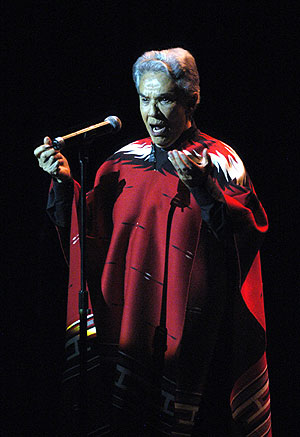
A woman wearing red poncho, short hair and never wore skirts. Despite being born in Costa Rica, his heart is with the Mexican people. A woman with a throat that embodies the romantic woes of the people.
There is a woman whose face denotes rows of penalties and joys. And his throat, he had drunk 45 thousand liters of tequila, is a legitimate label to have lived. In the throat, a feat that voice is endearing song is a cry that while a lullaby. A paradoxical magic traps us to hear it sing, it keeps us alert and contemplative time we dispersed into our dreams.
There is a woman, muse of poets, painters, filmmakers and musicians. Fell in love with Frida Kahlo, Diego Rivera inspired, met Trotsky and Carlos Gardel. A woman who got the punishment not be so bitter when his voice the tone, the stains of life and intensity.
that the gift of music, to make it resonate in every corner of the spirit. The words out of his mouth, float, flow ...
There is a woman who never played with dolls and likes guns. That has a slight limp for having pulled the window by a disappointment in love. Nearly 60 years ago singing romantic woes, squeezes your heart in every line.
There is a woman who has lived and few. There is a woman who calls ...
The ranchera and bolero are not the same since she's singing. That's why many times about certain genres from their interpreters is more dynamic, more agile .
Chavela played in the 1970 album that contains 12 traditional calendar legendary classic entitled Simon Blanco dedicated to one of the heroes of the Mexican Revolution.
A genre can be defined and determined theoretically. But after all these theoretical devices are always after the same creations of composers and performers. The music is experience, practice, have to listen. And who better to listen to Chavela to discuss Boleros, Valses and Ranch.
daughter of Herminia Lozano and Francisco Vargas rancher, was actually born in Costa Rica in
Musa poets and filmmakers, Chavela Vargas lived the golden decades of Mexico, the forties and fifties, and his name is associated with figures like Frida Kahlo, Diego Rivera, Agustín Lara and already in the 90 'the filmmaker Pedro Almodovar.
Sensual and torn, his voice has sung of love and jealousy, squeezing his heart for over 50 years, we could say that the singer Chavela is larger, age and talent, song Mexican.
began singing with her art on the streets of Mexico since the mid of the 50 hand of the compositions of Mexican musician José Alfredo Jiménez was fascinated his audience to reach the peak popularity in the 60 and 70 after recording his first album in 1961.
could say that the kick was made around the 50 of the hand of "Macorina." A song that has verses from the poet Alfonso Camin who was inspired by a beautiful Salvadoran racial crossover black and yellow. Chavela Vargas set to music and performed with their own arrangements influenced by the Cuban Danzon. Thus, the popularity of Chavela acquired amounted to "Macorina" Hymn to the category of Latin American guerrillas.
mariachis sets originating in Jalisco and whose name comes from the degeneration of the French word mariage (wedding) attributed its usual liven up the wedding party were in charge of broadcasting in post-revolutionary Mexico's ranchera song, native musical variety that symbolized the emergence of a new national consciousness.
ranchera music is a genre of folk song accompanied by the orchestra features that first appeared in Mexico in the early twentieth century.
The 1910 revolution in Mexico marked a profound change in the political conception of this country and was accompanied by new cultural manifestations . Thus, the ranchera music was born as a reaction to popular sources aristocratic European models dominated environments of Mexico off.
This music was inspired by the spirit of Mexican folk dances, whose festive, as in the case of huapango, precursor of La Bamba, combined with a story line of lyric or epic nature.
proliferated during the revolutionary years of chronic sung the deeds of men, women and armies. This form of romance, called run, acquired own style and technique which, from its origins, related closely with Ranchera music, a genre developed considered independent.
The ranchera song that developed its golden age alongside the likes of Jorge Negrete, Pedro Infante and Javier Solis who, during the 1940's and 1950's immortalized in recordings and films record the sound and the archetypal image of the performers of this genre.
Chavela appropriated the rancheras, boleros and waltzes composed by Jose Alfredo Jimenez, the musician born in Guanajuato, Mexico in 1926 and innundó to say about her voice and interpretation. Chavela itself described his admiration for Jose Alfredo Jimenez as an artist as she opens worlds
victim of alcoholism in 1979, Chavela had to retire from the stage and 12 years had to pass until singer returned to show business, this time thanks to the movies.
accepted work in Werner Herzog's film "Cry of Stone" (even traveled to the Patagonian Argentina undercover to film). A year later, Pedro Almodovar made Chavela, one of its girls. "The Vargas
returned in 1993 after decades without recording to a studio and recorded several of his classic hits as well as traditional songs from his repertoire compiled in the album titled "La llorona" which was recorded in Madrid and next year in Madrid, shaped the album "Macorina" which includes a special version of the tango by Carlos Gardel and Lepera "His Eyes."
His love of the tango and his admiration for Atahualpa Yupanqui is obvious. Chavela's relationship with Argentina in turn was spelled for songs by local artists who has played some examples of this are: ("Black Maria" by Homero Manzi, "Song of the simple things" Armando Tejada Gomez, " Thus, Sandro.
Knowing Gardel said the report that time:
I met Carlos Gardel, the RCA Victor Studios in New York. I said, "Lord, permit me to turn around you to see it everywhere?". And he died laughing. A handsome man, well groomed, very beautiful.
Chavela approaches the Argentine tango, as she knows close to each gender. Tiñiendo of the song itself, making itself. As this version of "His eyes were closed."
But I think it's more interesting to share this version that led to performed together the theme of Joaquin Sabina "Wedding Night." This is a version that has a funny prologue Chavela where it has become known as Sabina. The way to tell and tone of voice provide a nice touch of humor.
Friday, October 12, 2007
Ap Bio Lab Five Cell Respiration
Belize is a small country in Central America , bordering the Caribbean Sea , which borders Mexico north and Guatemala west and south. Separated from Honduras for 75 Km
Belize is part of the Maya region of Mesoamerica that extends from southern Mexico to Guatemala.
The first Europeans who entered what is now Belize was English , Followed by British woodcutters. They came in the year 1638 . As early as 1524 this territory was part of the kingdom of Guatemala as part of the province of Verapaz
In general we tend to visit different artists from one country or genre but we decided to break down a particular album that was released recently. This disc Watima of Andy Palacio and the Garifuna Collective.
Andy Palacio is from Belize and with different musicians Garifuna of Honduras, Belize and Guatemala, under the name of The Garifuna Collective, rescues mixed styles of music.
Watina is first track and just is the title track which translated into English can be translated as I Come .
The Garifuna history begins before the year 1635 on the island of St. Vincent in the eastern Caribbean. St. Vincent was inhabited by a tribe of Indians who called themselves Arawaks. The Kalipuna tribe from mainland South America invaded St. Vincent and conquered the Arawaks. The Arawak men were killed and the soldiers took wives Kalipuna the Arawak women. The Islanders were the result of the union of these two tribes.
The word "Garifuna", which means "cassava eating people" descended from "Kalipuna."
In 1635, two English ships carrying Nigerian slaves shipwrecked on the island of St. Vincent. At first, the English, Nigerians and Kalipuna that occupied the territory, fought against each other, but over time learned to live and mixed marriages were performed, thus creating the so-called Black Caribs who until the eighteenth century prevented European settlement on the island.
After several battles, the British finally drove the Caribs of the island. While many died of yellow fever, others were deported to Roatan Honduras but some of the ships were intercepted by the English, who sent the surviving Caribs 1700 Trujillo, Honduras where labor was needed and the army needed men.
The first Caribs who arrived on the coast of Belize were brought there as woodcutters by the English in 1802 and settled in the area near Stann Creek and what is now Punta Gorda.
Because of its alignment with the English, the Caribs found themselves on the wrong side of the political fence when Central America achieved independence from Spain. Those Caribs in Trujillo found themselves in the new country of Honduras where sentiments against the English were strong. Large numbers of Caribs fled to the coast of Belize where other Caribs already lived. It is this migration that is celebrated annually on November 19 as Garifuna Settlement Day, is a major holiday in Garifuna communities.
Garifuna culture tells the story of mass migrations and interbreeding and make a strong emphasis on music, dance and history. They have their own religion, which consists of a mixture of Catholicism, African and Indian beliefs.
Andy Palacio & The Garifuna Collective dedicated his first work specifically for the Garifuna culture. All these issues regain their particular language and some of their traditional rhythms.
Garifuna Yagan, (English: my canoe), the voices are accompanied only by drums and the lyrics tell the story of a man who lost in the sea, asks his canoe to take him back home.
Today there are only 250 000 Garifuna in the world. Globalization made the Garifuna heritage is being lost and with it the language (Garifuna), customs and music.
musician Andy Palacio, was born in Barranco, Belize and Garifuna grew up speaking at home and always was in contact with the music. At eighteen he traveled to Nicaragua and realized that their original culture was endangered and there met the last man who spoke Garifuna in Nicaragua.
The old man could not believe when he met Andy Palacio, a young man who spoke their language.
From that moment he decided to retrieve Palace and revitalize the Garifuna culture through music and soon gained a reputation as an interpreter of a regional style known as Punta rock, a dance based on a Garifuna rhythm mixed with some Caribbean styles like zouk and soca.
The meeting with producer and musician Ivan Duran, who founded in 1995 the Stonetreet Records, convinced Palacio made in focusing on less commercial rhythms and traditions to dive into the deepest roots of Garifuna music. Duran and Palacio created an ensemble with the best Garifuna musicians from Guatemala, Honduras and Belize. They also invited some of his favorite composers as Paul Babor, a 78-year Paranda icon.
in Belize began recovering a record Garifuna styles influenced by elements such as Paranda Latino, or sacred as Dugu or point.
You can hear several songs that deal with everyday issues, anecdotes and stories of the people. At the same time the drums also known as Garifuna first and second. And in the album highlights the presence of Paul Nabor a grandparent of Garifuna music. The disc is not a traditional Garifuna folklore work but rather a pop album with some reminiscences of reggae but based on Garifuna rhythms and traditional in the Caribbean region.
Baba is a song that can be translated as Father and became an anthem for the Garifuna community is very devoted to the Christian faith but with elements of African beliefs.
was composed by the young artist Adrian Martinez Garifuna of Belize involved with Andy Palacio.
In general the lyrics of the songs Garifuna stories are about everyday occurrences that serve as daily inspiration.
Jacob Edgar, the Putumayo label's artistic director had done some field work as an ethnomusicologist in the 90's and had been fascinated with the Garifuna music and the work of Andy Palacio, included some issues in earlier versions compiled theme in Putumayo.
Cumbancha, the parallel seal Jacob Edgar released this album in February this year. It is the first album with international circulation that is published recovering Garifuna music, in turn producer Ivan Duran is already putting together a disc with the presence of Garifuna women to maintain their way of working and genuine connection to the place of origin without artificial ingredients.
lidan Aban is an issue with a particular Paranda fusion of reggae, Caribbean dance music style which popularized with the Punta Garifuna music is one of the few songs on the album that incorporate this rate and his producer Ivan Duran did not want to venture into more commercial rhythm of the Garifuna but delve into their deepest roots. However, in lidan Aban roughly translated as Together, reggae and so merging spree particular.
The Garifuna population is distributed along the Atlantic coast of Belize and Nicaragua in 43 villages and settlements. In Honduras there are 98 000 Garifuna living in conditions of great health and nutritional deficiency. 78% of children under 12 are malnourished, and 3 out of 10 die within 2 years for this cause. 28% of the Garifuna population is illiterate and not enough schools in accessing education beyond the third grade. Only ten percent of the Garifuna who finish primary school continue their studies. A small percentage emigrated to the U.S. and the rest is part of the community and the lack of practice become illiterate.
Closing this journey through Belize and Garifuna community in particular, we can not ignore the song stops Miami, disk Andy Palacio & The Garifuna Collective, which speaks of rootlessness and the search place in the world.

Friday, October 5, 2007
Aluminium Boat Wheelchair
Iranian Music
until 1935 was known in the West as Persia. Precisely the Persian language is the official language also known as Fahsi who also spoken in Afghanistan, Tajikistan, part of India, and part of Pakistan.
Iran belonged to the early twentieth century a large portion of the land of Persia.
The Persian Empire stretched from Mesopotamia to and from India Caspian Sea to the Gulf Persian now countries Afghanistan, Iran and Iraq. They fought against the Romans and later the Byzantines for control of the territories of present Syria , Turkey , Palestine, Israel , Egypt and Saudi . The capital of the Persian Empire was Ctsesiphon today Baghdad, now the capital of Iraq.
But going to the musical aspect of Iranian culture, we say that Iran's traditional music is modal and monophonic. Mono because all the instruments play the same melodic scheme without harmonic overtones, and is modal because there are twelve basic modes, seven primary S called dastgah five Avaz-s known side from which are built rhythmic and melodic patterns that allow improvisation.
The construction of the Persian musical modes is similar to that of the Greeks, or by joining two tetrachords or four-note sequences. Although his pitch varies considerably in relation to the West.
Iranian music is mainly based on improvisation from the ways described and its transmission has usually been orally from teacher to student. Improvisation takes place from modal melodic rhythmic formulas. These formulas or parts of each mode on them called Gush and carried out impromptu performance, so that each artist can interpret each Gusher differently. Therefore, even the same piece played by the musician himself in the same concert will be different in its melody, form, duration and emotional impact.
These standards melodic patterns of Iranian traditional music, have been codified and systematized into a body called Radif whose content has been written in the early twentieth century, although as we said ancestrally belong to the oral tradition.
Radif There are different versions of each artist interpreted under the instrument you use. The performances usually consist of a melody sung by a soloist or occasionally in a duo with percussion accompaniment, although the orchestral combinations have become more popular over the years.
usual instrumental groups of Persian classical music today are composed of five of melodic character, one to three rhythmic and include also a singer.
Among the first ones the pulse chordophones tar, Setar, barbat (or 'ud , Arabic lute), santur psaltery, violin kemanché and ney flute , with percussion Tombak, Zarb and daf .
The Setar, a stringed instrument Tanbur descendant of pre-Islamic, is made of wood and has 25 or 26 fret adjustable. The literal translation of Setar is "Three Strings", although this has four strings, this instrument is preferred by the Sufis.
are several and various types instruments adopted in the Iranian music. The Santur, for example, is a dulcimer similar to that used in classical music of India.
A fairly widespread wind instrument is the ney flute common in the Near East (in the region of mágbreb) which is also used in Iran. Also used the kemanché, a violin similar to the viola Arab rebab, with four strings tuned like the violin, but held vertically on the left thigh, while the right hand holds the bow and Oud in Iran is called Barbat, another popular stringed instrument not only in Iran but especially in Turkey and Greece. Continuing with the stringed instruments in addition to the Setar, you may find a longer string instrument similar but called Tar.
The most popular percussion instrument is perhaps the Tombak, a wooden drum covered lambskin cup-shaped, similar in appearance to the darbuka his playing technique is also similar to that of the darbuka with both hands percussing their fingers in different ways. It serves not only as accompanied by rhythmic patterns, but also to accentuate and ornament the melodic phrases. A derivative of the Zarb Tombak is slightly larger than the Tombak and wider mouth, the sound and manner of implementation is closer to the tables of India. may also mention the Daf, another tool used by the Sufis that looks like a tambourine, similar to but larger Brazilian pandeiro is used in Iran both for classical music to popular music. Iranian percussionist Moshen Kasirossafar is a master both Tombak and daf in addition to Bulgarian Veselin Mitev (who plays the Kaval, Bulgarian traditional flute and the Gaida
Hossein Alizadeh. POETRY
Beyond instrumental aspect is important to focus also on the lyrical aspect as many you like suit traditional verse that says the singer. There is a vast treasure classic poetry in Iran, which comes from medieval times until presente de la mano de los cantantes. La mayoría de los poemas son libres rítmicamente, es decir no están delimitados por la métrica. Pero si poseen un fraseo intrínseco en cada palabra, generalmente son interpretados estos poemas en un contexto musical, en un conjunto o suite de gushes o motivos musicales extraídos del radif. Si bien la poesía clásica iraní remonta a tiempos medievales y la codificación de los radif es moderna, las formas musicales parecen datar de la época clásica en Persia. La música iraní, esta dotada de estos tesoros milenarios que dentro de sus reglas dan rienda suelta a la oración e improvisación de los artistas.
One of the master musicians Hossein Alizadeh radif is born in Tehran in 1951 who was nurtured by great artists such as Houshang Sharif, Aki Akbar Sanázi, Yousef Foroutan Abdollah Davami or others. Hossein study at music school in Tehran. And then integrate the national orchestra and became the conductor and soloist of the same. Always dedicated to the diffusion of Persian classical music, he joined the Aref Ensemble and worked with other similar assemblies. His first professional experience in Europe was next to the ballet by Maurice Bejart in the 80's. then studied composition and musicology in Berlin.
has performed throughout the mundo, apareciendo en diversos programas televisivos interpretando sus grandes composiciones, aportes invaluables para la música clásica de Irán. Quizás Alizadeh sea uno de los maestros más importantes de la escena musical contemporánea de medio oriente.
Enseño en la universidad de Teherán y en el conservatorio nacional. Escribió y publico una docena de estudios para Tar y grabo el extenso material de radif basado en la interpretación de Mirza Abdullah para Tar y Setar. Junto al músico y compositor armenio Djivan Gasparyan gran interprete del Duduk, un instrumento de viento muy popular en los caucazos cuyo sonido es similar al oboe y que en Irán se conoce bajo el nombre of Balaban. Performed a legendary concert in Tehran in 2003 that brought more than 10 000 people was recorded live between those recordings is possible to find this item entitled Sari Galin.
Santur and Tombak
When we mention the typical instruments of Iranian music beyond Tombak, one of the most important percussion instruments made a brief reference to Santur; The Santur is simply the name that is applied in Turkey and Iran to Dulcimer. This instrument is known in Mexico and Brazil as the Psalter. Its importance lies in its one of the oldest instruments in human history. Of Persian origin, is mentioned in the Old Testament, when in 1500 A
The typical dulcimer has two different bridges allowing you to have an extension of 3 / 8 registration was the forerunner of many similar instruments in Armenia and Turkey. In India you can find the Santoor, more rectangular and more strings that gave rise santur yangqin also Chinese, the harpsichord to the piano and even the cymbal that used Romans or Gypsies in Eastern Europe. The instrument also derives from the Greek Sandouri santur, in fact in the classic novel Zorba the Greek, the protagonist, plays Zorba Sandouri. Once again establishing cultural links between peoples through an instrument that in one way or another we tells the story of civilization.
V olviendo Iran, and in relation to Santur we can refer to one of the musicians who have decided to translate his art with this instrument. Alireza Mortazavi, was born in 1976 Ishfahan since childhood was dedicated to this instrument and even won awards in local contests. Then, it passes through Germany and Italy, influenced him to extend their roots to Western conceptions. With his brother Mohamadreza Mortazavi, Alireza carry out work where the dialogue is paramount between two instruments, the dulcimer and Tombak. Blooded Iranian music with this instrument ancient string interacting with the drum most popular Persian traditional music. In 2004 the brothers released "Now and then" Disk which includes among other things the background is playing Santur and Tombak entitled precisely.
SUFISM
The Sufism (in Arabic تصوف Tasawwuf) is the esoteric aspect of Islam, is ascetic and mystical response with pre-Islamic history, the imposition of religious, political and social life of Islam by the Arabs in the territories conquered the Byzantine and Sassanid empires. It is said that neo Persian language, which arose around the twentieth century AD, is the lingua franca of Sufism. This spiritual movement has been fertile fruits in the literary and musical.
the beginning of the program we made reference to their structure, based on different ways on which melodic rhythmic patterns called forth gushed over which improvisation is allowed.
The gusher usually have an internal form of arc that rises to the climax ( auj ) about two-thirds of the part to resolve after the initial mood and tone of melody, very similar to how the tunes progress of the Western classical tradition.
The interpretation of this repertoire, with a strong spirit of improvisation, creates an effect called hal , or inspiration, can actually make the listener aware both as a musician. This tradition is nurtured particularly the Sufi mystical philosophy, especially as the theme of his poetry concerns and vocal performance.
VAS
Iran has given birth to one of the most prolific and talented singers of the Middle East today . His talent is not just as a performer but as a composer. His name is Azam Ali, a multifaceted artist who made an interesting solo resuming European medieval songs from Part of that included a English gasped. A turn in the project Niyaz, takes verses of Sufi poets ancient and ancestral melodies merged version with electronic music. But beyond Niyaz, his latest project and his solo album, Portals of grace to which I referred, the first steps of Azam Ali international recording career came with the duo Vas, along with prominent American percussionist Greg Ellis. Born in 1996, this project originated when these two great musicians met at the University of California at Los Angeles and began making music. They eventually signed with Narada label, distributed by Virgin and held 4 successful albums Highlights from not only the artistic but also critically acclaimed. These musicians beyond their personal ambitions and going their point of convergence, have played with various artists around the world and even sang and played in the final issue of the famous last part of the Matrix trilogy.
Azam Ali, born in Iran but grew up from 4 years in India
His latest album is called Feast of silence and was released in 2004 after 3 year break with this project because both artists, touring and recording with musicians such Beck, Serj Tankian of System of a dawn, among others.

Subscribe to:
Comments (Atom)