Thursday, December 27, 2007

Benignbladder Growths


Revolution as a dream, a utopia. Revolution as possible. Revolution tangible. Revolution as fighting, defiance. Revolution seems slip through our fingers, but then again fret from the gut.

restlessness, rebellion, radical transformation of a state. Violent change of institutions. Revolution is life, fight.

It is not enough to feel that while there is injustice, humiliation, silence.

Revolution as a contentious term and comprehensive. Political revolutions, artistic and scientific.

This word, in this concept, flow The anger, hope, struggle and dreams. revolution is also poetry and song. Because we speak of consciousness, we speak of action and ideas.

Music, faithful companion of the revolution. is a tool, a plug-and often is the same music: Revolution.

For subverts and educates. Because awake and animated. Because it operates.

is undeniable that music is an element inevitable in any revolutionary process. From troubadours singing reflecting social conditions of its people to the marches and hymns that accompany explicit guerrillas and fighters, music is an inevitable element. It is a tool for reporting and relief of conscience.


In Latin America not have failed revolutions of various kinds, with different characteristics and outcomes. And every revolutionary process in the past and present have had and have music feature. Many artists have had to go underground with their sounds, with their music.
The run is a genre of Mexican folk opera par excellence. This musical style is almost All Mexican territory with some nuances.

The period of greatest growth occurred precisely during the revolution as the "balladeers" about the events reported by revolutionary poetry sung or written sheets.

is why often gives "balladeers" a role similar to the minstrels that are counted and the people singing the vicissitudes of his country.


Revolution Mexican occurred between 1910 and 1921, has been widely reported and studied through the songs that stayed in the voice of the people even after the fight ended . In Corridos can see how in certain phases of the conflict had some partnerships, for example, between Madero, Pancho Villa and Emiliano Zapata.


Chavela Vargas, he recorded some of the famous corridos of the Mexican Revolution and is an interesting example of how the themes of the calendar accompanied Zapata revolutionary in its way and people in their everyday stories. The album was released in 1970 and among the corridos of the Revolution is one that contains dedicated to one of the characters in those years a revolutionary military killed Jesus Felipe Angeles born Ramirez Hidalgo , 1869 and killed in Chihuahua , 1919.

Note: For reasons unrelated to music without a map at the moment we can not publish the songs listed, we apologize, we are trying to solve the problem.

SPANISH CIVIL WAR

Europe also had revolu-tionary processes, their social and political conflicts accompanied by music. Another special of 2007 was one dedicated to the English civil war which had its particular popular song.
English Civil War passed between 1936 and 1939: Started following a military uprising originated in Morocco, headed by General Francisco Franco, which quickly spread throughout the country.

Nationalist forces occupied the English capital on March 28, 1939 and April 1, General Franco officially ended the war. And therefore, the principle of dictatorship. On September 29 the Board National Defense Franco appointed prime minister and commander of the Armed Forces.

The two opposing sides (the nationalist and republican army) joined the role of The International Brigades. These brigades exemplified as that generation at that time felt that the fight against fascism was beginning to settle in the English soil.

At the end of 1935 and following this shift to the right, began to take shape a broad coalition of leftist parties that are preparing for elections in February 1936 and shortly later be known as the Popular Front.

On the other hand, The National Front or Order was created to oppose their interests to those of the left in the closest election that Spain had previously lived.

So he took the military uprising that led to nearly three bloody years of civil war. The uprising began in Melilla on July 17, 1936 led by General Franco. By 22 July and you could say there was civil war in Spain.

So many artists

took it up and re versioned songs and hymns Republicans the time of the English civil war. Many representatives of the anti-fascist considered those events as a test of the Second World War. That is why until today, the theme is still valid, because the struggle continues. Artists like Quilapayún (Chile), Joan Manuel Serrat, Paco Ibanez, Rita Pavone, Chilean Rolando Alarcón, Banda Bassotti, Victor Jara, among many others have sung some of these songs.

Until 1937 Madrid had been the priority of the national army but it was not easy for Franco to conquer it, it took a good while. Thus, the heroic resistance from Madrid to the army of Franco was immortalized in these couplets Madrid defense in this case we interpret the unmistakable Joan Manuel Serrat.

Note: For reasons unrelated to music without a map at the moment we can not publish the songs listed, we apologize, we are trying to solve the problem.

NICARAGUA

Nicaragua has had its own particular revolutionary process, accompanied, of course, the music. Just as the Zapatistas today are inspired by the struggle waged by Emiliano Zapata in the revolution of the early twentieth century, the Sandinistas in Nicaragua resumed figure Augusto Cesar Sandino - the general of free men - that took up weapons with 29 miners gold mine San Albino in northern Nicaragua demanding the withdrawal of invading troops.

Sandino developed against the invader "Yankee" a victorious guerrilla war in the jungle and mountains, which lasted until 1933, when the U.S. withdrew from Nicaragua leaving installed to the command National Guard (GN) - has created, financed and trained - a counterfeiter named Anastasio "Tacho" Somoza family reasons connected with some well-known oligarchs of Nicaragua and a relative of President of Nation Juan B. Sacaza.

When expressing the withdrawal of invading troops, Sandino and his army defused an important group of people settled in an area of \u200b\u200bagricultural cooperatives in The Segovias (Wiwili).


Thereafter were harassed by the GN permanently. Sandino traveled to the capital - Managua - to meet with President Sacaza and discuss the situation. At the end of the meeting Sandino was assassinated along with his top aides by members of the GN orders of Somoza, the February 21, 1934. The next day the GN blood and fire swept through cooperatives, killing many of its members and destroying everything found.

The Sandinista National Liberation Front, is proposed to continue the trace of Sandino. The front was founded in 1961 as a politico-military, with the aim of overthrowing the Somoza dictatorship. objectives to reach in 1979 after fierce battles.

The songwriters Luis and Carlos Mejia Godoy have composed hundreds of songs alluding to the Sandinista revolution. There is no doubt that his songs helped to victory in front. Among his works, highlight the album: "Song to the FSLN epic" which brings together several songs that have different episodes since the birth of the Front in 1961 to take power in 1979. It is said that the songs of these singers contributed decisively take shape this fight and win on July 19, 1979.

just listen to a song that celebrates the birth of the FSLN. Included in this epic song performed by Carlos Mejía Godoy accompanying the Nicaraguan revolutionary process.

Note: For reasons unrelated to music without a map at the moment we can not publish the songs listed, we apologize, we trying to solve the problem.

CUBA

If we talk about revolution mention the most emblematic of Latin American revolution, Cuba.

Fidel, Che, Cienfuegos and the rest of the revolutionaries succeeded in toppling the dictatorship of Batista and took power in 1959. Known are the songs that have accompanied this process from Carlos Puebla to the protagonists of the Cuban nueva trova. The vast musical styles born in Cuba have had their relationship from the lyrical to the revolution. Not only the songs of the troubadours, but also sones and boleros accompanied ideologically libertarian socialist spirit on the island for decades.

Among the great bolero singers in Cuba found the figure of Omara Portuondo born in Havana in 1930 . She debuted with her sister Haydee was a dancer at the Tropicana. Then the two formed a vocal quartet with Elena Bourke and Moraima Secada directed by pianist Aida Right. The quartet known as the "Aida", became one of the most important Cuban history despite have recorded a single album. They were acclaimed everywhere and even shared the stage with Nat King Cole at the Tropicana.

In the mythical 1959, Omara released his debut solo album entitled "Black Magic." Continued for several years singing in turn with "The Aida" but then turned to his solo career but part of the legendary group Charanga, La Orquesta Aragon.

In 1996 convened to participate in the Buena Vista Social Club, Wim Wenders film that rescued many of the great stars of Cuban music in the twentieth century that Omar Ibrahim Ferrer sang with the song "Silence." In 2000 World Circuit Buena Vista Social Club launches presents Omara Portuondo, which strengthens the international impact of this global artist then continue releasing albums and touring. His last work was carried out with guitarist Martin Rojas., There included a particular version of the classic guajira Carlos Puebla "Farewell."


Note: For reasons unrelated to music without a map at the moment we can not publish the songs listed, we apologize, we are trying to solve the problem.

VENEZUELA

Beyond of controversy and debate that the figure of Chávez has in the different sectors of society in Venezuela and internationally. Chavez's policy is proclaimed revolutionary and contrary to the interests of neoliberalism and the rule represented by the United States.
Since its inauguration in 1999, Chavez proposed to continue the Bolivarian revolution by taking up the ideals of American unification. Chavez survived coups, boycotts and confrontations. And of course the music is also present in the Venezuelan revolutionary process that is ongoing. A drastic change and following the logic of power that came driving Venezuela in previous years.

In Venezuela, there is experimental and folk that is symbolically representative of the Chavez regime. We refer to the group "Wood", whose director is Noel Marquez.

This group is made up of 27 members and resume Afro Venezuelans, his album "In times of Bolivarian revolution" was publicly blessed by President Chavez on his television program "Hello President."

The disc contains 14 songs with strong political content. For example the first track is called "Uh Ah Chavez will not go" and the third "Chavez knocks anyone," in the rest of the album run through many styles African American and Venezuelan lanos with political references a bit more implicit but always burst.

the album "In times of Bolivarian Revolution" without a map music fills the theme "Sing Venezuela."

Note: For reasons unrelated to music without a map at the moment we can not publish the songs listed, we apologize, we trying to solve the problem.


EZLN


Another revolutionary process underway in Latin America is that special arrangements have been practicing with the Zapatistas. Followers of the legacy of Emiliano Zapata, the Zapatista Army of National Liberation (EZLN), led an uprising in 1994 which meant the consolidation of five hundred years of struggle by indigenous peoples in a cry of "Enough." Indigenous and Peasants rebelled and took up arms some municipalities and since then have been building autonomy in rebellion, radio, magazine, hospitals and schools in the autonomous municipalities themselves, developing trade and concrete actions with organizations, groups and individuals in Chiapas The rest of Mexico and the world.

In 2004 he launched the campaign for the double anniversary of the EZLN, 20 years after his birth and 10 years of the uprising that became known in the world. Shouting "and just "joined many groups around the world and of course musicians and poets echoed their demands.

DEMOCRATIC POLITICAL SENDING IT UP AND DOWN THE MILITARY OBEDIENCE. Today shoes for military power is subordinate to civil power.

Who organized governance boards in each of the political and civic centers called snails carry out the maximum of obeying and rule from the bottom left. Ago several years that the revolutionary process conceived in Chiapas has been making use of the word and not the fire.

The EZLN held six public declarations of the Lacandon jungle. The Sixth led to the gestation of a national plan of struggle that was strengthened by the actions known as "The Other Campaign." An entire program would address in detail the socio-political situation of the Zapatistas, as each of the situations we have come in today's Music Without Maps. Another program we would analyze the music being played over and that has accompanied the processes of resistance in our own country during times dictatorial and even democracy. Today we choose to share some of the sounds of the world have been hand in hand with processes that transcend the music but that also constitute the culture of each people. The ideas of freedom, revolution and resistance. The project to maintain a cultural identity for the attacks on foreigners. Let's close listening to one of the many musical art events that have accompanied it from the beginning, the Zapatista struggle as we said at the beginning of the program is all the struggles. Because beyond the particularities and various historical contexts of revolutionary events (Sandino, Cuba, the English Civil War, Venezuela, Chiapas) there are demands that have to do with the dignity of men and women, the struggle for recognition and respect for the other, different. The Zapatista struggle for a world where many worlds fit, is a collective struggle that concerns not just Chiapas or Mexico.

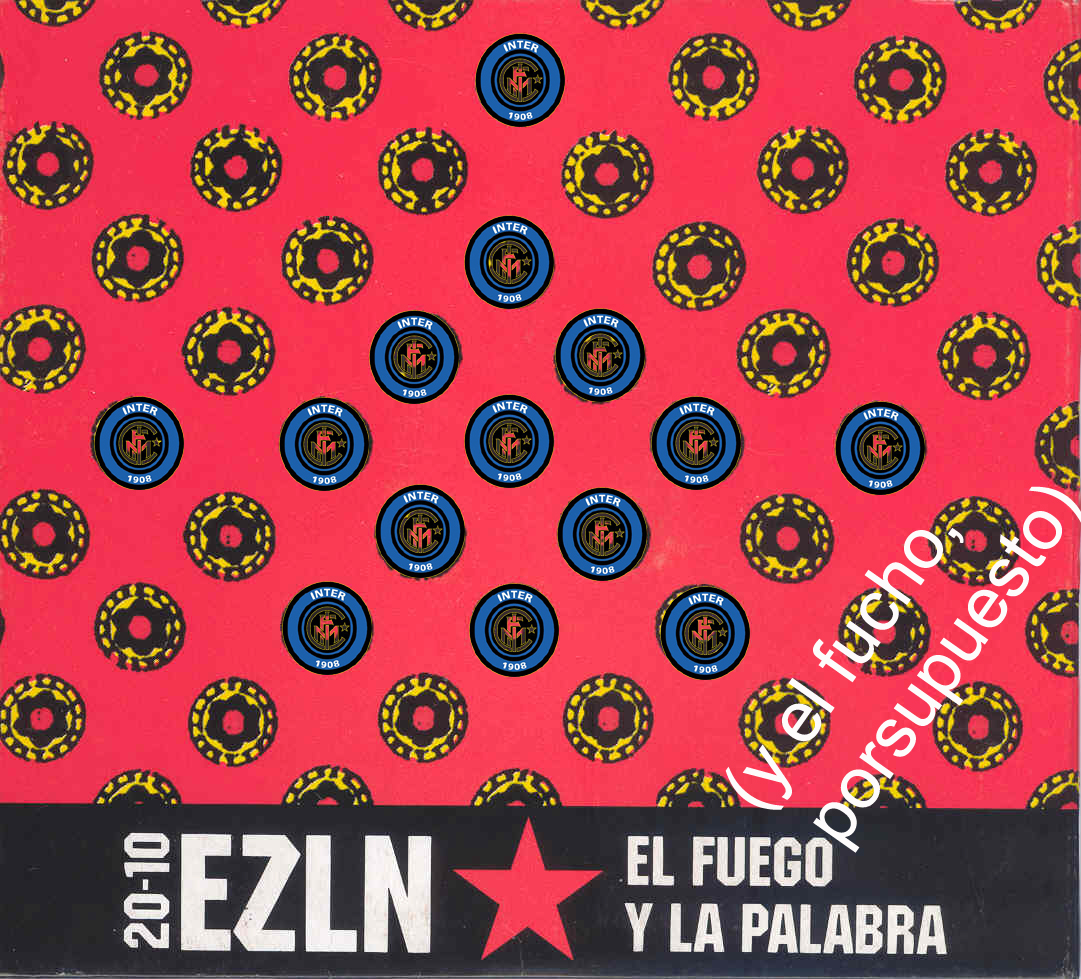
mentioned in the double anniversary of the EZLN released 4 CDs that accompanied the launch of "the fire and the word" journalist Gloria Muñoz Ramirez.

In those records artists from different latitudes exclaimed to join the Zapatista struggle. The English group "Acts against decorum "originated in Madrid in 1995. is clearly a militant group. The group experienced the mixture of different rhythms like rock, hip hop and electronic music from the hand of Latin influences of Caribbean music and reggae .

created in 1998 Rabiamuffin Cultural Association in order to meet energy and support social movements like the Zapatistas in Chiapas.

In 2001 the group separated and some of its members continued mixing rhythms from the Latin rock group "Waste". The group participated Volume 1 of the collection of artists who adhere to Chiapas in this double anniversary of the EZLN. Acts against decency are collective voice of the cry that demands a world where many worlds fit.

Note: For reasons unrelated to music without a map at the moment we can not publish the songs listed, we apologize, we are trying to solve the problem.

Wednesday, December 5, 2007

Pregnancy Test Sliver Positive Line

"Colombian Cantadoras" Special Music

Toto La Momposina

Various peoples and ethnic groups in the world have chosen the song as a means not only of expression but also on oral transmission of knowledge, traditions and stories of its people. In the voice of the Troubadours, has filed the popular legacy of narrating and singing. From ancient times until today, using different elements, instruments and styles, there have been artists who through their voices have managed to maintain and preserve cultures. In the case of the African ethnic group Mandinka Griots we find, scattered throughout Mali, Senegal and Guinea, those guardians of the history of his people who use the song and the sound of a harp-like stringed instrument known as Kora.
In our Latin American continent are different types and classes of minstrels and troubadours who have shown from the musical to each country.
The Colombian land are a number of women who have been, since ancient times, the gift of being able to sing verses accompanied by clapping and drums of African descent, caller, cheerful and drums, have preserved the history of his people. The tradition of social events to accompany the song has given birth to great artists and songwriters that have become cultural ambassadors of their country. This is the case Etelvina Maldonado, Petrona Martinez, the queen of Bullerengue or Toto La Momposina, true inheritors of the tradition of sung dances. Not only are there singers in the Caribbean but also on the Pacific coast.
Bullerengue, Chalupa, Chanda, Berroche and Fandango are some of these dances airs sung many of which have led to the cumbia rhythm that illustrates how reliable the triple heritage of Colombian music: African, Indian and European .
Colombian Caribbean people recognize the singers and women who possess the wisdom and history. The role of women in traditional Colombian music is extremely important. Among them we mention the ambassador best known outside Colombia, Toto La Momposina.
Talaigua comes from the village in the heart of an island called Mompós that is in the middle of the river Magdalena. Swimming in the music and dance from the Colombian Caribbean, his work is inspired by a rich cultural mix that combines elements of African, Hispanic indigenous traditions and melodies. She presents
rhythms of the Caribbean coast of Colombia along with son, guaracha, rumba and Cuban bolero. Born into a traditional family of musicians, learned to sing and dance since childhood. His first album "Cantadora" was published in 1983 and has long been a collector since even today it is difficult to achieve. They include the traditional song "Three strikes".
Ten years after the fire recorded live, which was included in the seal of Peter Gabriel's Real World and involved the Toto gateway to the so-called World music or world music.
In Argentina, first published Suramusic this artist in the country with the disc Carmelina, whose original edition dates from 1996 and which appeared cantadora Toto as musically renewed. Also published Pacantó or the singer, original 1999 album until 2004 he came to Argentina, where the artist made his debut as a songwriter with songs of great quality and features African musicians in his band.
also participated disk Toto NO TO DEBT, also published in Argentina in 2003 for which Toto was especially the opening track entitled Things pa 'think repudiation of foreign debt in third world countries.


Petrona Martinez:

This art of dance originally sung accompanied only the drums and palms. One of the rhythms and styles that are part of this mode and is perhaps one of the oldest touches is The bullerengue , a song traditional Colombian Atlantic Coast, which has its roots in the African fertility laments that arrived in Brazil with the slaves. The bullerengue is perhaps one of the dances which are most noticeable African descent. Over the fences, are retained ancestral songs that are part of the funeral songs, one of the religious rituals that preserve more African flavor. It is said that the Bullerengue developed along with the process of syncretism that had the different dances sung by joining the Catholic faith-based festivals such as San Pedro and San Pablo on 24 and 29 June, the immaculate design on 8 December, Christmas and of course the Virgin of the Candelaria celebrated in many towns in the region.

The bullerengue is a rhythm and touch typical of the Caribbean region, the leading voice intoned, in most cases women, is added the chorus of responders who set the beat with maracas of Totumo, pleats and of course the ever-present palm sung at dances. With respect to the drums, which give the flavor of Africa, we must mention the drum "happy" also known as female and drums "caller" known as male. In some cases the drum is added Dual patch touches very much on the Magdalena River region.

The bullerengueras singers compose their songs while performing everyday tasks. The letters refer to their work, their habits and transmit the identity of its people. The songs have responsorial structures. The singers are often versions are traditional pieces and often anonymous. Overall the office of singers and dancer learns family tradition. It respects the elderly to be legitimate bearers of tradition. Not only for music, old singers also know medicinal plants, food and prayers. The first professional recordings bullerengue originated in the late 70's with Irene Martinez soneros and Gamero, then Emilia Herrera and more recently the singers who will travel today as Etelvina Maldonado, Petrona Martinez and Toto The Momposina.

Petrona Martínez is heir to a strong tradition of singers of bullerengue , started by his great-grandmother Carmen Silva and continued by his grandmother and aunt Orfelina Tomasita Martínez Martínez, who heard her singing since childhood, while doing their work daily, and during the festivities of San Cayetano.

The first time was left Colombia in 2000. When accompanied by her son went to Europe. The following year, and as a citizen of the world traveled to Bristol, England, to record his album "Beautiful singing." The latest album is titled Petrona "My tambolera" and was released in 2003.


speak

of bullerengue and should be clarified that this guitar and dance has many variations or air: Sit Bullerengue , but hotness and slow which allows the singer to lyrical and melodic variations exploiting its expressive resources. The Fandango using onomatopoeic singing and while its configuration is similar to melodic sit ternary is key. And the Chalupa, a variant of the more rapid time Bullerengue and festive character. While Petrona Martinez is called the queen of Bullerengue is a great singer from boats like the one that opens this disc Argentina recent edition "Beautiful singing" entitled Life worth.


Interview by Nicolas Falcoff Petrona Martinez


Etelvina Maldonado

Another prolific bullerenguera songwriter and folksinger is Etelvina Maldonado, was born on the island of Santa Ana (Department of Bolivar, Colombia) on April 26, 1936. Etelvina is possessed of great qualities as an improviser, which knows very well explode on stage. In his long career as a folksinger has become one of the most representative dance performers sung, fandangos and bullerengue .

With over 70 years, has become known nationally and internationally from its participation in the group CD Cantadoras Ale Kuma project led by Leonardo Gomez. In 2003, for the first time, created his own group music and recorded "Canto, chime and drum" their first album in which shows all his charm, his love and interpretive warmth of traditional music.

A great songwriter and author, on the album his voice is attached to the drum gay, cuaghe and Colombian bagpipes (those aerófnos built with the heart of the cactus). Etelvina Maldonado is a worthy heir to the dances sung.

Martina Camargo

Martina Camargo native of San Martin, now living in Cartagena with his family and is one of the most renowned singers of Tambora. Martin's father, Don Cayetano Urrutia Camargo is one of the most important figures in the history of the drum of his village, a peasant farmer, poet and composer who used to write and recite poetry and compose verses to tambora many of whom recovered martina his own daughter in his solo album "Aires de San Martín." Martina Camargo's voice maintains the tradition of people singing in southern Bolivar.

His voice is sharp and strong, and drums and drums through an interaction fascinating. Martina form part of the artistic collective Ale Kuma, which we have already referred and 2 singers who unified the Pacific coast with two other Caribbean among which is martina.

In his solo album takes traditional rhythms and touches of the Magdalena River played with drums: Berroche, Tambora, Guacherna and Chanda. The latter with large African influence, whose essence is percussion, drums and clapping on everything. The album was produced by Leonardo Gómez de ale Kuma and has the presence of Andrea Echeverri, the lead singer of pop and rock Aterciopelados brings its particular color in a drum voice Corré entitled Morenita with Martina Camargo.

Interview by Nicolas Camargo Falcoff Martina


Diana Hernandez


We speak of a young artist who was influenced by the songs of older women has also decided to rescue the edges of bullerengue Colombian Caribbean and carry out an album with several great tunes composed by women representatives of the genre in one of the disks singing alone and the other with several of these teachers.

Diana Hernandez with producer and percussionist Leonardo Gomez, carried out this project known as Maria Mulata, like a bird in the region and whose album is named after Route Drum.

Diana wondered Etelvina's voice, singing Ale Kuma Group Leonardo Gomez and when invited to do vocals on the album began to study more and more this style and then recorded on the CD of Paul Florez, the king called Porro style as it fandango, sit bullerengue are winds of cumbia. Travel in 2005 Diana took place throughout the area bullerenguera learning and contacting these queens of style, and Arboletes Necoclí (in the department of Antioquia) and Mary Lower, San Basilio de Palenque and San Cayetano (Bolivar) where Petrona Martinez hails recordings were made that are part of this double album released in late 2006. Etelvina Maldonado, Eulalia Gonzalez, Martina Balseiro Eustaquia Amaranth Eloisa Garcés and big sister Graciela Salgado Paulina Salgado Batata whom we have spoken. All these women are in the itinerary of drums in the disk B containing recordings in situ with Diana in subtle Piqueria.

Diana Hernandez, has just 25 bullerengue And sing like the great master, in the hard drums Schedule B shows that it can sing along to them so very interesting.

HERE Listen to their songs


ALE

KUMA

The singers are not only present in the Colombian Caribbean but also on the Pacific coast. This will clear the producer had decided to join Leonardo Gomez 4 singers, 2 from each region to carry out an interesting art collective called Ale Kuma whose name in Guahibos, Cauca, which means seamless union. Cantadoras disc, was released in 2002 and include several songs performed by Solis and Gloria Perea Benign Pacific and voices of Afro-Caribbean and Martina Camargo Maldonado Etelivna (a of the best singers of Tambora, in the region of Mompos).

Ale Kuma's work is a bit different from the pure traditional songs because the songs, drums and clapping sung traditional dances were added other instruments like the piano and bass. Also remains the essence of these touches and songs, the aggregate is very fluid and organic. Leonardo Gomez is in charge of bass, piano Nicolas Ospina and we add several percussionists as Urian Sarmiento.