Revolution as a dream, a utopia. Revolution as possible. Revolution tangible. Revolution as fighting, defiance. Revolution seems slip through our fingers, but then again fret from the gut.
restlessness, rebellion, radical transformation of a state. Violent change of institutions. Revolution is life, fight.
It is not enough to feel that while there is injustice, humiliation, silence.
Revolution as a contentious term and comprehensive. Political revolutions, artistic and scientific.
This word, in this concept, flow The anger, hope, struggle and dreams. revolution is also poetry and song. Because we speak of consciousness, we speak of action and ideas.
Music, faithful companion of the revolution. is a tool, a plug-and often is the same music: Revolution.
For subverts and educates. Because awake and animated. Because it operates.
is undeniable that music is an element inevitable in any revolutionary process. From troubadours singing reflecting social conditions of its people to the marches and hymns that accompany explicit guerrillas and fighters, music is an inevitable element. It is a tool for reporting and relief of conscience.
 In Latin America not have failed revolutions of various kinds, with different characteristics and outcomes. And every revolutionary process in the past and present have had and have music feature. Many artists have had to go underground with their sounds, with their music.
 The run is a genre of Mexican folk opera par excellence. This musical style is almost All Mexican territory with some nuances.
The period of greatest growth occurred precisely during the revolution as the "balladeers" about the events reported by revolutionary poetry sung or written sheets.
is why often gives "balladeers" a role similar to the minstrels that are counted and the people singing the vicissitudes of his country.
Note: For reasons unrelated to music without a map at the moment we can not publish the songs listed, we apologize, we are trying to solve the problem.
SPANISH CIVIL WAR

Europe also had revolu-tionary processes, their social and political conflicts accompanied by music. Another special of 2007 was one dedicated to the English civil war which had its particular popular song.
English Civil War passed between 1936 and 1939: Started following a military uprising originated in Morocco, headed by General Francisco Franco, which quickly spread throughout the country.
Nationalist forces occupied the English capital on March 28, 1939 and April 1, General Franco officially ended the war. And therefore, the principle of dictatorship. On September 29 the Board
The two opposing sides (the nationalist and republican army) joined the role of The International Brigades. These brigades exemplified as that generation at that time felt that the fight against fascism was beginning to settle in the English soil.
At the end of 1935 and following this shift to the right, began to take shape a broad coalition of leftist parties that are preparing for elections in February 1936 and shortly later be known as the Popular Front.
On the other hand, The National Front or Order was created to oppose their interests to those of the left in the closest election that Spain had previously lived.
So he took the military uprising that led to nearly three bloody years of civil war. The uprising began in Melilla on July 17, 1936 led by General Franco. By 22 July and you could say there was civil war in Spain.
took it up and re versioned songs and hymns Republicans the time of the English civil war. Many representatives of the anti-fascist considered those events as a test of the Second World War. That is why until today, the theme is still valid, because the struggle continues. Artists like Quilapayún (Chile), Joan Manuel Serrat, Paco Ibanez, Rita Pavone, Chilean Rolando Alarcón, Banda Bassotti, Victor Jara, among many others have sung some of these songs.
Until 1937 Madrid had been the priority of the national army but it was not easy for Franco to conquer it, it took a good while. Thus, the heroic resistance from Madrid to the army of Franco was immortalized in these couplets Madrid defense in this case we interpret the unmistakable Joan Manuel Serrat.
Note: For reasons unrelated to music without a map at the moment we can not publish the songs listed, we apologize, we are trying to solve the problem.
NICARAGUA

Sandino developed against the invader "Yankee" a victorious guerrilla war in the jungle and mountains, which lasted until 1933, when the U.S. withdrew from Nicaragua leaving installed to the command
When expressing the withdrawal of invading troops, Sandino and his army defused an important group of people settled in an area of \u200b\u200bagricultural cooperatives in The Segovias (Wiwili).
Thereafter were harassed by the GN
The Sandinista National Liberation Front, is proposed to continue the trace of Sandino. The front was founded in 1961 as a politico-military, with the aim of overthrowing the Somoza dictatorship. objectives to reach in 1979 after fierce battles.
The songwriters Luis and Carlos Mejia Godoy have composed hundreds of songs alluding to the Sandinista revolution. There is no doubt that his songs helped to victory in front. Among his works, highlight the album: "Song to the FSLN epic" which brings together several songs that have different episodes since the birth of the Front in 1961 to take power in 1979. It is said that the songs of these singers contributed decisively take shape this fight and win on July 19, 1979.
just listen to a song that celebrates the birth of the FSLN. Included in this epic song performed by Carlos Mejía Godoy accompanying the Nicaraguan revolutionary process.
Note: For reasons unrelated to music without a map at the moment we can not publish the songs listed, we apologize, we trying to solve the problem.
CUBA

If we talk about revolution mention the most emblematic of Latin American revolution, Cuba.
Fidel, Che, Cienfuegos and the rest of the revolutionaries succeeded in toppling the dictatorship of Batista and took power in 1959. Known are the songs that have accompanied this process from Carlos Puebla to the protagonists of the Cuban nueva trova. The vast musical styles born in Cuba have had their relationship from the lyrical to the revolution. Not only the songs of the troubadours, but also sones and boleros accompanied ideologically libertarian socialist spirit on the island for decades.
Among the great bolero singers in Cuba found the figure of Omara Portuondo
In the mythical 1959, Omara released his debut solo album entitled "Black Magic." Continued for several years singing in turn with "The Aida" but then turned to his solo career but part of the legendary group Charanga, La Orquesta Aragon.
In 1996 convened to participate in the Buena Vista Social Club, Wim Wenders film that rescued many of the great stars of Cuban music in the twentieth century that Omar Ibrahim Ferrer sang with the song "Silence." In 2000 World Circuit Buena Vista Social Club launches presents Omara Portuondo, which strengthens the international impact of this global artist then continue releasing albums and touring. His last work was carried out with guitarist Martin Rojas., There included a particular version of the classic guajira Carlos Puebla "Farewell."
Note: For reasons unrelated to music without a map at the moment we can not publish the songs listed, we apologize, we are trying to solve the problem.

Beyond of controversy and debate that the figure of Chávez has in the different sectors of society in Venezuela and internationally. Chavez's policy is proclaimed revolutionary and contrary to the interests of neoliberalism and the rule represented by the United States.
Since its inauguration in 1999, Chavez proposed to continue the Bolivarian revolution by taking up the ideals of American unification. Chavez survived coups, boycotts and confrontations. And of course the music is also present in the Venezuelan revolutionary process that is ongoing. A drastic change and following the logic of power that came driving Venezuela in previous years.
In Venezuela, there is experimental and folk that is symbolically representative of the Chavez regime. We refer to the group "Wood", whose director is Noel Marquez.
This group is made up of 27 members and resume Afro Venezuelans, his album "In times of Bolivarian revolution" was publicly blessed by President Chavez on his television program "Hello President."
The disc contains 14 songs with strong political content. For example the first track is called "Uh Ah Chavez will not go" and the third "Chavez knocks anyone," in the rest of the album run through many styles African American and Venezuelan lanos with political references a bit more implicit but always burst.
the album "In times of Bolivarian Revolution" without a map music fills the theme "Sing Venezuela."
Note: For reasons unrelated to music without a map at the moment we can not publish the songs listed, we apologize, we trying to solve the problem.
EZLN

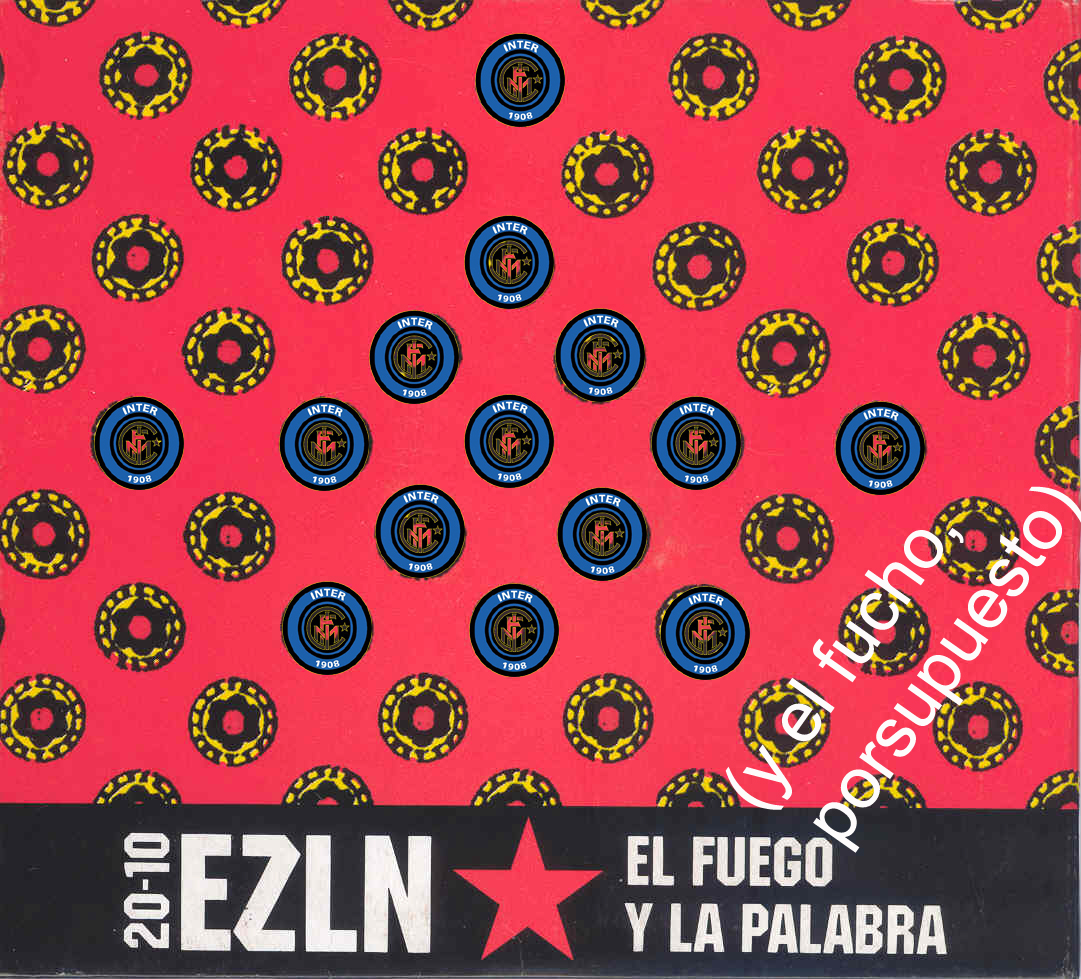
Another revolutionary process underway in Latin America is that special arrangements have been practicing with the Zapatistas. Followers of the legacy of Emiliano Zapata, the Zapatista Army of National Liberation (EZLN), led an uprising in 1994 which meant the consolidation of five hundred years of struggle by indigenous peoples in a cry of "Enough." Indigenous and Peasants rebelled and took up arms some municipalities and since then have been building autonomy in rebellion, radio, magazine, hospitals and schools in the autonomous municipalities themselves, developing trade and concrete actions with organizations, groups and individuals in Chiapas The rest of Mexico and the world.
In 2004 he launched the campaign for the double anniversary of the EZLN, 20 years after his birth and 10 years of the uprising that became known in the world. Shouting "and just "joined many groups around the world and of course musicians and poets echoed their demands.
DEMOCRATIC POLITICAL SENDING IT UP AND DOWN THE MILITARY OBEDIENCE. Today shoes for military power is subordinate to civil power.
Who organized governance boards in each of the political and civic centers called snails carry out the maximum of obeying and rule from the bottom left. Ago several years that the revolutionary process conceived in Chiapas has been making use of the word and not the fire.
The EZLN held six public declarations of the Lacandon jungle. The Sixth
mentioned in the double anniversary of the EZLN released 4 CDs that accompanied the launch of "the fire and the word" journalist Gloria Muñoz Ramirez.
In those records artists from different latitudes exclaimed to join the Zapatista struggle. The English group "Acts against decorum "originated in Madrid in 1995. is clearly a militant group. The group experienced the mixture of different rhythms like rock, hip hop and electronic music from the hand of Latin influences of Caribbean music and reggae .
created in 1998
In 2001 the group separated and some of its members continued mixing rhythms from the Latin rock group "Waste". The group participated Volume 1 of the collection of artists who adhere to Chiapas in this double anniversary of the EZLN. Acts against decency are collective voice of the cry that demands a world where many worlds fit.
Note: For reasons unrelated to music without a map at the moment we can not publish the songs listed, we apologize, we are trying to solve the problem.


0 comments:
Post a Comment